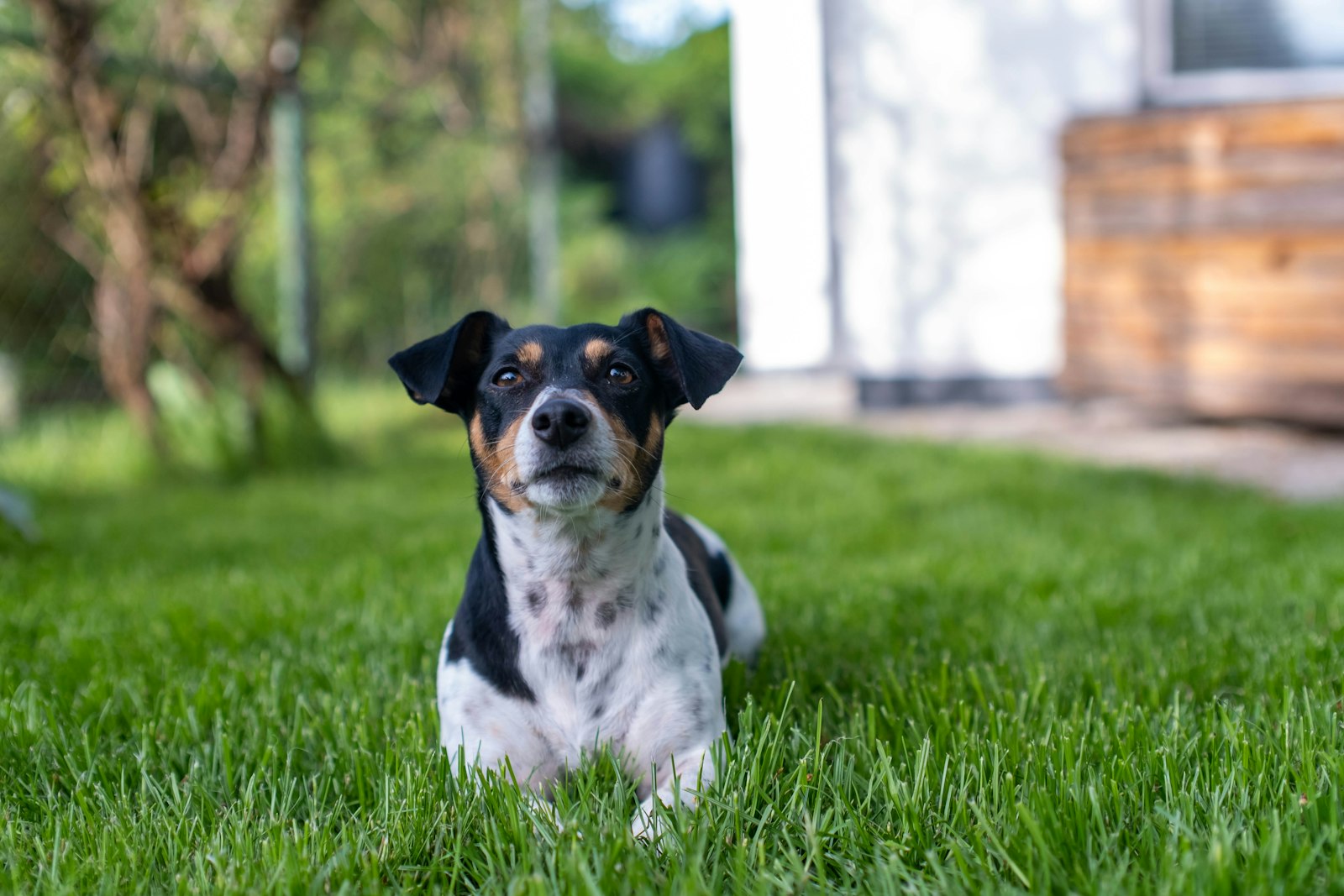
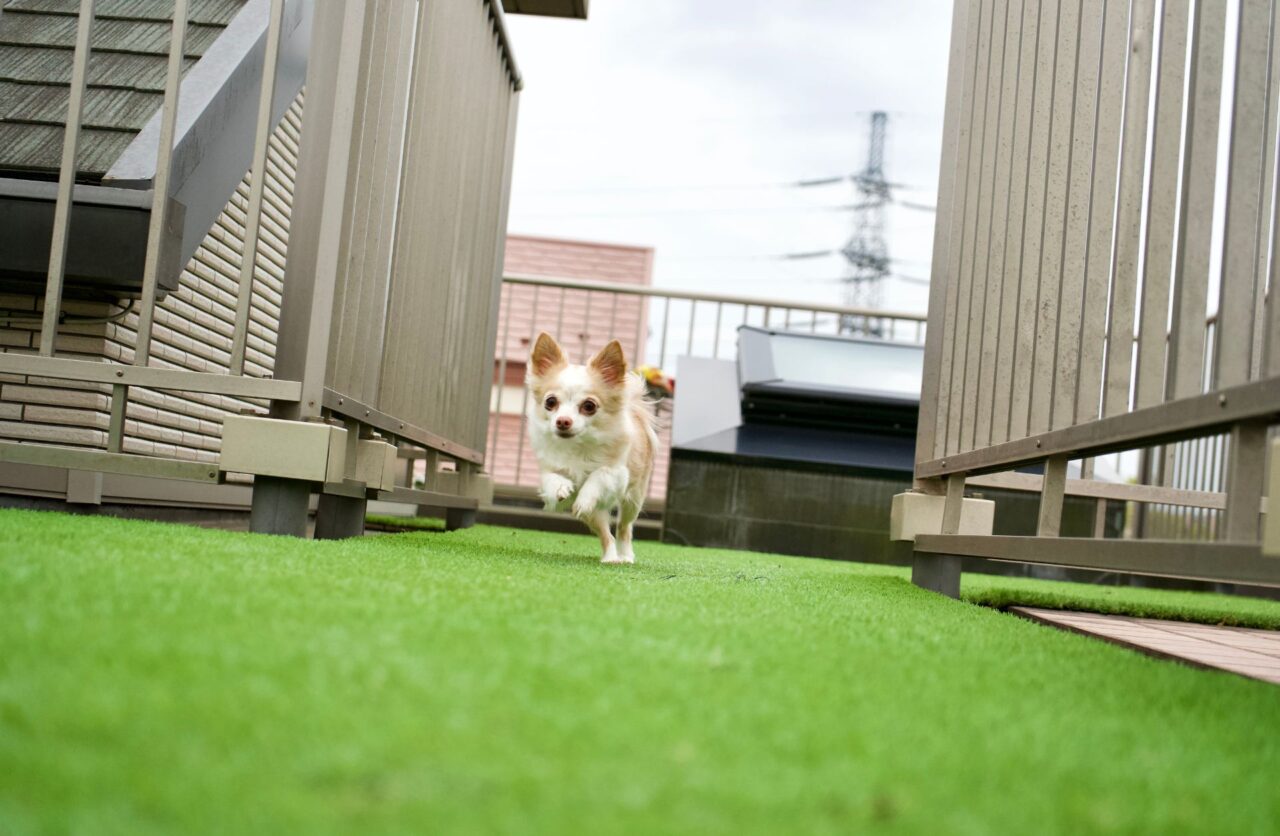
Pet-friendly artificial turf is one of the most common requests we get from dog owners in Pickering, and for good reason. A natural lawn and an active dog rarely coexist for long: you end up with worn tracks, muddy paws, yellow urine spots, and holes along the fence line. Pet-friendly artificial turf in Pickering solves most of that, provided it is installed with the right drainage and infill. Here is what actually matters before you book an install with our local installation team.
Is artificial turf good for dogs?
Yes, artificial turf is a good surface for dogs when it is built for pets. Pet-grade systems use permeable backing, a free-draining stone base, and antimicrobial infill so urine passes straight through and solids lift off easily. Dogs cannot dig through it, they do not track mud into the house, and the surface stays even underfoot. The key is that a pet install is not the same as a decorative one, and the difference is under the grass, in how it drains.
Drainage: the part that makes or breaks a dog lawn
Drainage is the single most important factor in a pet turf install. Urine needs to flow down through the backing, through the infill, and into a stone base that carries it away rather than holding it near the surface. In Pickering this matters more in some neighbourhoods than others. The clay-heavy soils around Duffin Heights and Seaton do not drain on their own, so a proper pet install there needs a deeper open-graded stone base to keep water moving. Sandier lots near the West Shore and Frenchman's Bay drain more readily but still need a compacted, sloped base so nothing pools. We build pet lawns with a fully permeable backing rather than a hole-punched one, which clears liquid far faster.
Odour control: keeping a dog lawn fresh
Odour comes from urine sitting in the infill, not from the turf itself. The fix is a combination of the right infill and simple upkeep. We use a coated antimicrobial infill, often a zeolite type, that traps and neutralizes ammonia between rinses. A weekly hose-down, or a heavier rinse in the summer heat, keeps things fresh. For multi-dog households in tighter yards, an enzyme cleaner made for turf every few weeks handles the rest. Done right, a pet lawn in a Liverpool or Amberlea backyard does not smell, even in August.
Will my dog damage the turf?
Quality pet turf stands up to normal dog use, including running, digging attempts, and daily traffic. The fibres are designed to spring back, and because there is no soil to reach, digging goes nowhere. High-traffic paths along a fence do flatten over time, which is why we recommend a durable, higher face-weight product for active dogs. Our pet-friendly turf page covers the specific products we use for dog runs and busy backyards.
Is pet turf safe and non-toxic?
Reputable pet turf uses lead-free fibres and non-toxic infill, so it is safe for dogs to lie on, chew near, and play on. Because it removes the need for pesticides, herbicides, and fertilizer, many owners find it is actually a cleaner surface than a chemically treated natural lawn. It also does away with the mud and standing water that can carry bacteria after a wet week near the bay.
Planning a pet-friendly install in Pickering
- Choose a durable, higher-density turf for active or multiple dogs.
- Insist on a fully permeable backing and an open stone base, especially on clay lots in Seaton and Duffin Heights.
- Use an antimicrobial infill designed for pets, not plain silica sand alone.
- Plan a slight slope so rinse water and rain drain away from the house and patio.
- Keep a simple rinse routine, heavier in summer, to stay ahead of odour.
Pet lawns often pair well with a low-maintenance backyard turf layout for the rest of the yard, so the whole space stays clean and green.
How long does pet turf last with dogs?
A quality pet turf lawn lasts many years even with active dogs, typically in the same 15 to 20 year range as any well-installed synthetic lawn. Dogs do not shorten the turf's life the way they wear out natural grass, but heavy daily traffic in the same spots can flatten fibres over time. Choosing a higher face-weight product for busy runs, and rotating where you throw the ball so wear spreads out, both help. The infill may need a top-up every few years in high-use areas, which is a quick, inexpensive service call rather than a reinstall. For most Pickering households, a pet lawn outlasts several natural-lawn reseeding cycles.
Frequently asked questions
How do I clean dog urine from artificial turf?
Rinse the area with water regularly so urine flushes through the drainage base. For odour, use a turf-safe enzyme or antimicrobial cleaner every few weeks. Solid waste is picked up as usual, then the spot is rinsed.
Does pet turf drain well enough for two or three dogs?
Yes, as long as it is installed with a permeable backing and an open-graded stone base. Multi-dog yards simply benefit from a deeper base and a more frequent rinse routine, particularly on Pickering's clay soils.
Can my dog dig through artificial grass?
No. The turf is fastened at the edges and sits over a compacted stone base, so there is no loose soil to reach. Dogs may paw at it out of habit, but they cannot dig holes the way they can in a natural lawn.
Book a pet-friendly turf quote in Pickering
If your dog has claimed the backyard, we can help you take it back. Call (289) 277-0119 or use our contact page for a free on-site assessment, and we will recommend the right pet turf and drainage setup for your yard.